
How Text-to-Video AI Is Simplifying Content Marketing
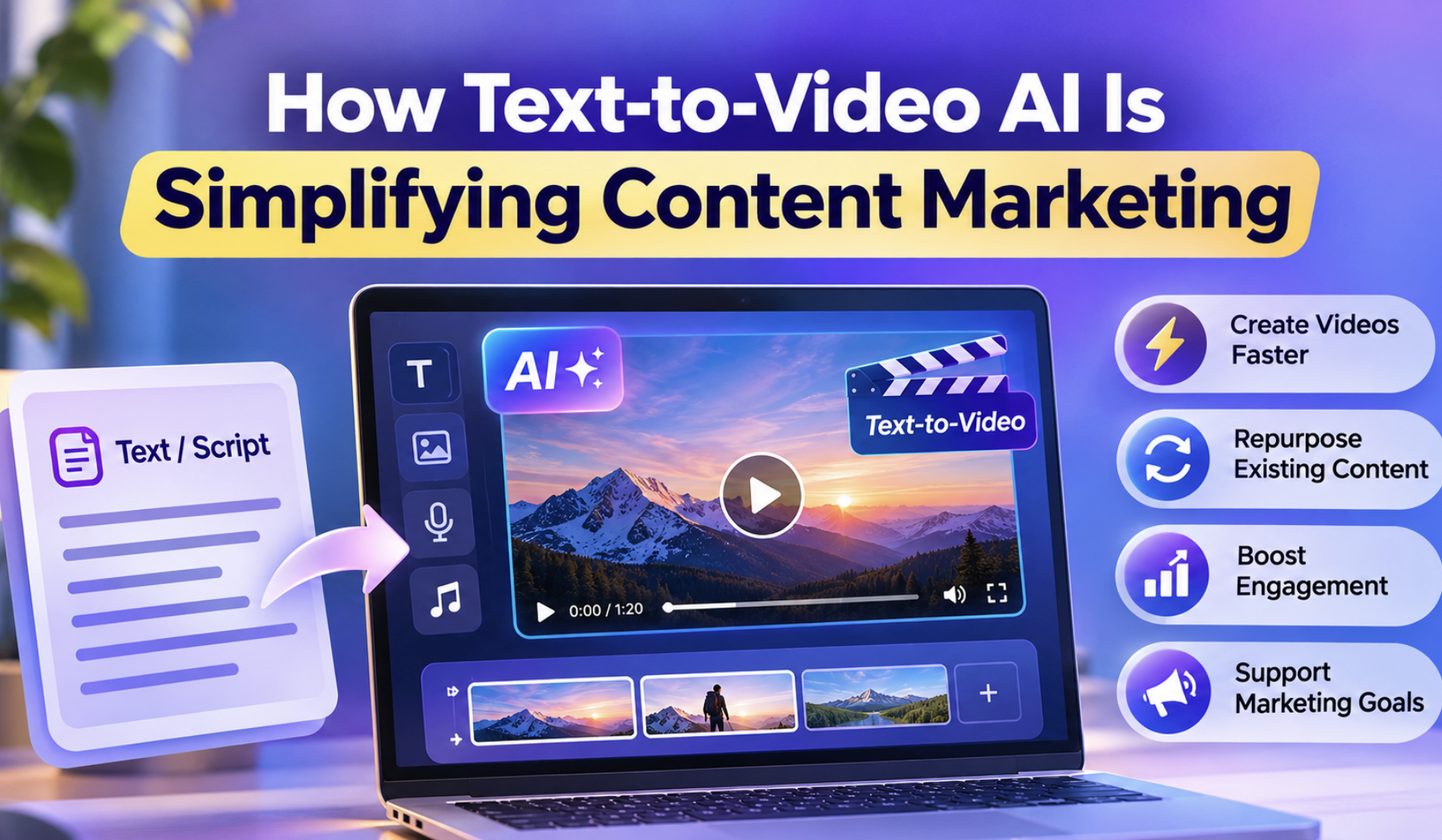
Content marketing helps businesses reach new customers, explain their products, and build stronger connections with their audiences. While blogs, guides, and social media posts remain useful, video has become another important way to share information online.
The challenge is that creating videos regularly takes time. Businesses often need scripts, visuals, voiceovers, and editing support before they can publish a finished video. For smaller marketing teams, managing every step can be difficult.
Text-to-video AI is making this process easier. These tools turn written ideas into videos, helping businesses create promotional content, product explainers, and social media clips without filming every scene. Marketers can spend more time developing useful messages while AI handles parts of the production process.
What Is Text-to-Video AI?
Text-to-video AI is technology that turns written prompts, scripts, or descriptions into video content. Depending on the tool, it can generate visual scenes, animations, voiceovers, subtitles, and background music.
Users describe what they want to create, including the topic, visual style, characters, and intended audience. The AI then generates video content based on those instructions.
For content marketers, this means an existing blog post, product description, or campaign idea can become the starting point for a video. Instead of preparing every visual element manually, teams can generate an initial version and refine it before publishing.
How Is Text-to-Video AI Making Content Marketing Easier?
Text-to-video AI helps businesses simplify production, repurpose existing materials, and create videos for different marketing channels.
1. Turning Written Content Into Engaging Videos
Businesses already invest time in creating blogs, tutorials, product guides, and other written resources. These materials often contain information that can work well in video format.
A detailed blog post can become a short educational video, while a product description can be adapted into a promotional clip.
Marketers can select the most useful information, prepare a clear script, and generate supporting visuals. This allows them to reach people who prefer watching videos rather than reading long articles.
2. Reducing the Need for Traditional Video Production
Filming marketing videos often involves cameras, equipment, locations, and editing work. Although professional production remains valuable, not every campaign requires a full filming process.
AI video generators can produce scenes and visual effects from written descriptions. Businesses can create animated explainers, product introductions, and short advertisements without recording every shot.
This can be especially helpful for smaller teams. Digital Success also discusses these opportunities in its article about AI video creation for small businesses, including how AI can simplify video production.
3. Creating Content for Different Social Media Platforms
Social media marketing often requires several versions of the same message.
A business might need a short promotional video for Instagram, an educational clip for YouTube, and a product announcement for TikTok.
Text-to-video AI helps marketers turn scripts into videos and experiment with different visuals, lengths, and formats. Teams can then adjust the content to suit each platform.
This makes it easier to maintain a consistent message while preparing videos for different audiences.
4. Testing Different Marketing Ideas
Marketing teams frequently experiment with headlines, campaign messages, and visual styles to understand what attracts customers.
Text-to-video tools can help create different versions of a campaign without rebuilding every video from the beginning.
A brand promoting a new product could develop one video focused on product features and another highlighting customer benefits.
Comparing engagement and audience responses can help marketers identify which message works better.
Popular Text-to-Video AI Tools for Content Marketing
Several AI tools help businesses create videos from written content. Each platform offers different features for video generation, editing, and content production.
1. Invideo
Invideo is an AI-powered video creation platform that helps marketers turn written ideas, scripts, and documents into videos. Its text to Video tool generates scenes with realistic AI characters, cinematic effects, animations, voiceovers, and music from simple prompts.
The platform provides access to models such as Seedance 2.5, Gemini Omni Flash, Veo 3.1, Kling 3.0, and MiniMax H3. These support different creative needs, including realistic movement, character consistency, dialogue, and cinematic storytelling. Supported generation options include eight-second clips in 1K, 2K, and 4K.
Marketing teams can create product advertisements, UGC-style videos, promotional clips, explainers, and social media content. They can also generate AI avatars and describe how characters should look, move, and interact within a scene.
Beyond generation, invideo supports scriptwriting, storyboarding, and an editable timeline. Its AI agents can analyze creative briefs, generate clips, and organize sequences for further editing. Real-time multiplayer collaboration also helps team members review and refine projects together.
These features make invideo a useful option for businesses that want both AI-generated visuals and greater control over the finished video.
2. Pictory
Pictory is an AI video creation platform that helps businesses convert scripts, articles, presentations, and other written materials into video content.
Users can provide a script, paste a webpage link, or upload a document to begin creating a video. The platform helps organize information into scenes and combine it with visuals, narration, and captions.
Pictory also includes AI avatars, voice generation, and video editing features. Users can edit videos through text, adjust individual scenes, and create shorter clips from longer recordings.
These options are useful for marketing teams that already produce blogs, webinars, and educational content. Instead of creating every video from scratch, they can adapt material they have already prepared.
Pictory also supports video translation and dubbing, helping businesses prepare content for audiences in different languages.
For marketers focused on content repurposing, Pictory offers a practical way to extend the reach of existing materials.
3. Fliki
Fliki is an AI video creation platform that combines text-based video generation with AI voices, visuals, and editing features.
Users can enter a short prompt, script, or blog post to create a video. The platform can generate a script, select visuals, add narration, and include subtitles and music.
Fliki offers more than 2,000 AI voices across over 80 languages and dialects. This makes it useful for businesses that need narrated explainers, educational videos, and content for audiences in different regions.
The platform also supports AI video clips, digital presenters, and short-form content creation. Users can prepare marketing videos, social media clips, and training materials without recording a presenter for every project.
Its content creation features can also help teams plan recurring videos for social media channels.
For businesses that regularly publish narrated content, Fliki provides an accessible way to combine written information with speech and supporting visuals.
How Can Businesses Build a Text-to-Video Marketing Workflow?
Using AI video tools effectively requires a clear process. Businesses can start with a few simple steps.
Step 1: Choose Content That Works Well as a Video
Start with topics that customers regularly search for or ask about. Product explanations, educational guides, tutorials, and common questions are good starting points.
Choose one clear message for each video rather than trying to cover too many topics.
Step 2: Prepare a Short Script
Turn the selected information into a script with a clear beginning, middle, and ending.
Use simple language and include important details that viewers need to understand. The script should also match the intended video length.
Step 3: Generate and Review the Video
Enter the script into an AI video tool and describe the preferred visuals, characters, and style.
Review the generated scenes and make adjustments where needed. Check that the visuals match the message, narration is clear, and any product claims are accurate.
Some tools also allow AI agents to help with editing tasks. Digital Success explores this approach in its article about AI agents in video editing and content creation.
Step 4: Publish and Measure Performance
Prepare the video for the intended platform and publish it with a relevant title, description, and supporting text.
Monitor views, audience retention, engagement, and conversions. These results can help businesses understand which types of video content are most useful to their audiences.
Best Practices for Creating Marketing Videos With AI
AI can simplify production, but thoughtful planning remains important.
- Keep the message clear: Focus each video on one topic or customer need.
- Maintain brand consistency: Use suitable visuals, colors, and messaging across campaigns.
- Review generated content: Check scenes, narration, subtitles, and factual details before publishing.
- Choose the right format: Adjust video length and layout for each marketing platform.
- Keep human creativity involved: Use AI to support production while making final storytelling decisions.
These practices help businesses create more relevant videos instead of simply producing more content.
Conclusion
Text-to-video AI is changing content marketing by making video production easier for businesses of different sizes. Marketers can turn written ideas into visual content, repurpose existing materials, and prepare videos for social media, websites, and advertising campaigns.
Tools such as invideo, Pictory, and Fliki provide different ways to simplify this process, from generating cinematic visuals to creating narrated videos and adapting written content.
As these technologies continue to improve, businesses that combine AI tools with useful information, clear storytelling, and careful editing will be better prepared to create consistent video content.
Frequently Asked Questions
1. What is text-to-video AI in content marketing?
Text-to-video AI converts written prompts, scripts, and ideas into video content. Businesses can use it to create product explainers, promotional videos, educational clips, and social media content without filming every scene.
2. Can text-to-video AI create complete marketing videos?
Yes. Some AI video platforms can generate scenes, visuals, voiceovers, subtitles, and music from written instructions. Users can then review and edit the generated content before publishing.
3. Is text-to-video AI suitable for small businesses?
Yes. Text-to-video AI can help small businesses create marketing videos without organizing professional filming for every project. It is useful for explaining services, introducing products, and preparing social media content.
4. Can text-to-video AI replace traditional video production?
Text-to-video AI can handle many production tasks, but it does not replace every part of traditional filmmaking. Projects that require real customer footage, detailed product demonstrations, or specific creative direction may still benefit from professional filming and human editing.